

Depending on the type of clothing, the odor varies: sweat odors particularly embed themselves in synthetic sportswear, musty odors are more likely to develop in rarely worn jackets, coats, or wool textiles, and stubborn urine odors often affect children's clothing, washable diapers, underwear, or carpets in households with pets. Anyone who wants to remove odors from clothing needs more than just another wash cycle. Our Bactador expert Lisa Peters explains what causes this depending on the garment and how you can permanently, rather than just superficially, get rid of stubborn odors regardless of the material.
- Why it is important to remove odors from clothing
- Causes and types of odors in clothing
- Effective methods for odor removal
- Effective thanks to microbiology: The Bactador method
- Common mistakes when washing and removing odors
- Conclusion
- Frequently asked questions
Sweat, moisture, or urine leave odor molecules deep in the fibers, which often remain after a regular wash cycle.
Conventional detergents and household remedies such as vinegar or baking soda usually only mask the odor temporarily and do not reach the deeper layers of the fibers.
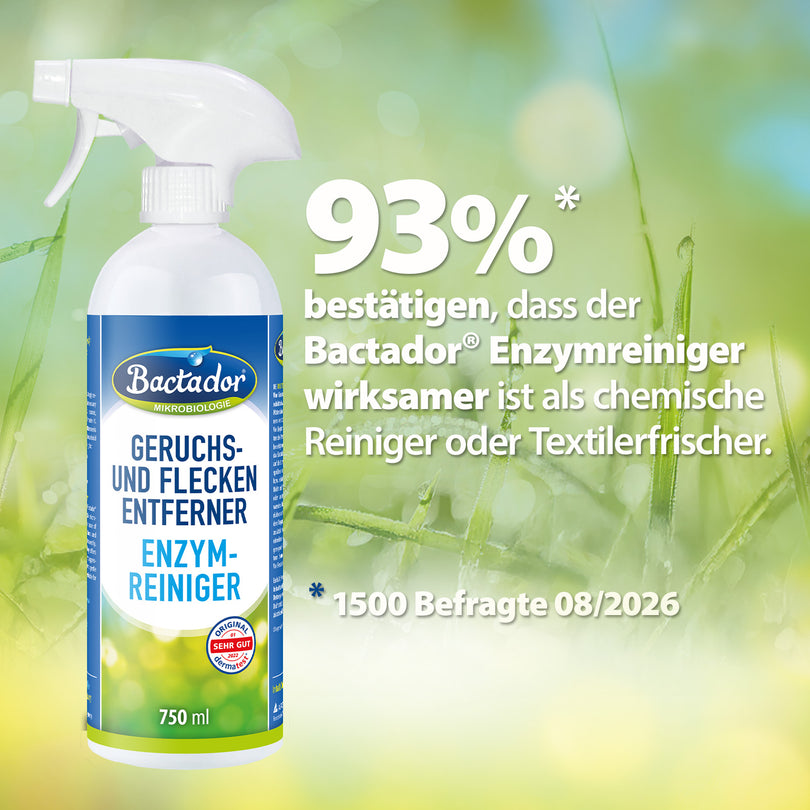
Bactador's enzyme cleaner, on the other hand, breaks down the source of the odor deep within the fibers permanently, without any aggressive ingredients.
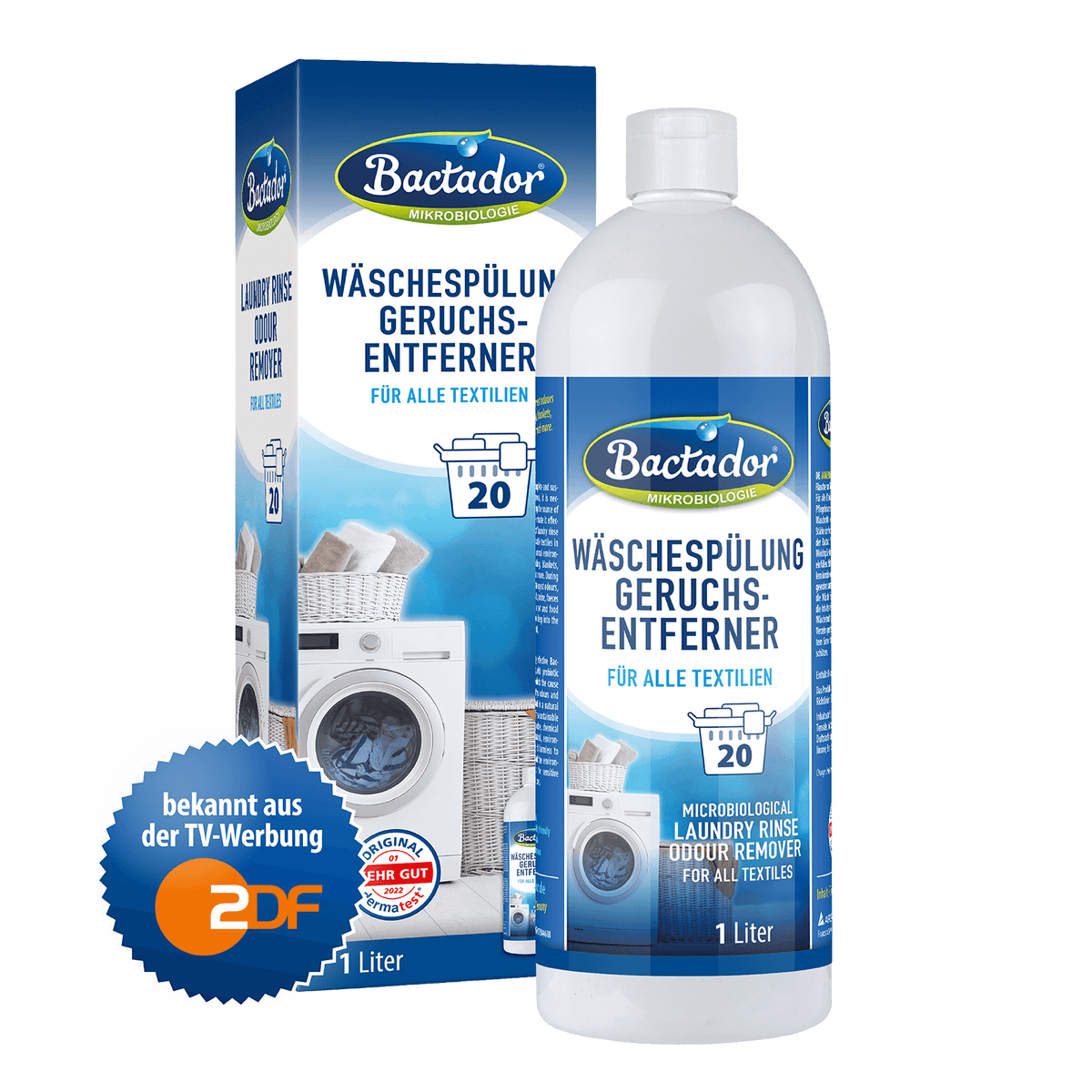
Bactador fabric softener is simply used in addition to the detergent and is suitable for all wash cycles and temperatures.
Bactador is formulated to be gentle on materials and skin, making it also suitable for delicate clothing such as baby textiles or underwear and sportswear worn directly on the skin.
Why it is important to remove odors from clothing
Odors in clothing arise from a wide range of causes, from sweat to cooking fumes and occasional smoke or basement odors, to organic residues such as urine. If left untreated, they not only affect your daily well-being but also become stubbornly embedded in the fibers. Materials that are frequently worn and washed, such as sportswear or children's clothing, are particularly affected.
If the source of the odor is not treated with the right product, the odor can even intensify over time and make overall textile care more difficult. The microbiology in Bactador addresses this cause directly and permanently breaks down unpleasant odors deep within the fibers instead of just masking them.

Causes and types of odors in clothing
Not every odor in textiles has the same cause. The three most common triggers are sweat, moisture, and organic liquids such as urine. Bactador products offer the right solution for all odors of organic origin.
Good to know: If an odor source is only superficially treated, the odor may become noticeable again due to body heat or moisture when worn. That is why simply “perfuming” or masking it is never enough in the long term; the cause of the odor must be completely broken down.
Sweat and body odors
Sweat itself hardly smells fresh; it is only through decomposition by bacteria on the skin that the typical unpleasant odor develops. Synthetic fibers such as polyester absorb these odor compounds particularly strongly and release them with difficulty. This makes sportswear a classic problem: Does your clothing smell like sweat even though it has just come out of the washing machine? This is due to stubborn bacteria in the synthetic fibers that easily survive conventional wash cycles. Sportswear thus quickly becomes a classic problem where the sweat odor stubbornly remains despite washing.

Musty and moldy odors
Musty odors in clothing are usually caused by moisture, for example if laundry is left damp in the laundry basket for too long or clothing is stored in poorly ventilated closets. High indoor humidity also promotes this effect. The resulting odor compounds become stubbornly embedded in the fibers and can no longer be completely removed by airing alone.
Moldy or even rotten odors usually occur when clothing is not completely dried after washing. If residual moisture remains in the fibers, odor-producing bacteria can quickly spread there.
Insufficient cleaning itself can also play a role, for example if the washing machine is overloaded, the wash temperature was set too low, or the detergent is not suitable for the type of soiling. Similarly, a dryer that has already developed deposits can cause freshly washed clothing to smell unpleasant again. Last but not least, the cause is sometimes simply that damp laundry is left crumpled in the laundry basket instead of being hung up to dry promptly.
Sometimes the washing machine itself can be the source of the odor: residues and deposits in the drum or around the rubber seal transfer directly to the clothing during the wash cycle, causing it to smell musty despite a clean wash. Here, the Bactador Fabric Softener Odor Remover does double duty: it not only treats the clothing itself but also removes musty residues directly from the machine in the same wash cycle.

Removes odors deep within the fibers permanently
Against stubborn odors (e.g., urine, feces, vomit)
Hygienically fresh laundry - for all wash temperatures
Urine and similar unpleasant odors
Urine and similar organic liquids are among the most stubborn odor sources in textiles. Many parents know this from children wetting the bed at night, but the topic also regularly arises with trainer pants, washable diapers, or period underwear. This also applies to households with dogs or cats, where the animals mark their territory or have an accident on the carpet. If you want to remove stubborn urine odors from clothing, a regular wash cycle quickly reaches its limits, as the organic components have already become firmly embedded deep within the fibers.
Effective methods for odor removal
If you want to remove odors from clothing permanently, the right approach is essential. The first and most important step is always to wash the laundry itself, but not every washing method reliably achieves the desired result. Even popular household remedies deserve a closer look, as they often do not deliver on their promises.

Washing as the first measure
Washing unpleasant-smelling laundry in the machine is always the most obvious first step. The right wash temperature, the correct dosage of detergent, and the complementary use of a specially formulated odor remover are important. The Bactador Fabric Softener is based on microbiology, used in addition to the regular detergent, and breaks down the odor source microbiologically directly during the wash cycle at all wash temperatures.
Here is how to do it:
- Check the care instructions for your clothing beforehand.
- Dose the detergent correctly and add it to the machine as usual.
- Add 50 to 100 ml of Bactador Fabric Softener Odor Remover to the fabric softener compartment. Do not use additional fabric softeners or heavily perfumed laundry additives while using Bactador, as these can impair the microbiological effect.
- Start the wash cycle. The wash temperature does not matter.
- Hang the laundry up damp after the wash cycle.
- Do not use the dryer, so that the microorganisms can continue to work undisturbed.

“I now add the Bactador Fabric Softener to every wash cycle for sportswear and children's clothing when I really want to make sure that no odor remains. A nice added benefit: It also works against musty odors in the washing machine itself.”
Can odors be removed from clothing with household remedies?
Many people first turn to household remedies such as vinegar or baking soda for unpleasant odors in clothing. While these can mask the odor temporarily, they do not remove the cause. The actual odor source remains, so the odor often quickly returns as soon as the clothing becomes damp again or is exposed to heat. In addition, some household remedies can attack the fibers and bleach or damage clothing. Household remedies are therefore not suitable for permanent odor removal.
Effective thanks to microbiology: The Bactador method
While household remedies and conventional detergents remain on the surface, Bactador addresses the cause directly. The solution lies in natural microbiology: An odor neutralizer based on this principle specifically and permanently breaks down organic odor sources instead of just masking them.
Microbiology as key technology
Bactador relies on natural microbiology: When they come into contact with the odor source, the microorganisms in Bactador are activated and produce enzymes that break down dirt and odor particles deep within the fibers. This process continues until the odor source is completely removed. This means the odor is not masked but permanently eliminated. This is what sets Bactador's enzyme cleaner apart from conventional detergents and fragrance sprays.
Good to know:
The microorganisms in Bactador are particularly active as long as the material is still damp. That is why it is important not to put textiles immediately into the dryer after application, but to let them air dry instead.
Application and versatility of Bactador products
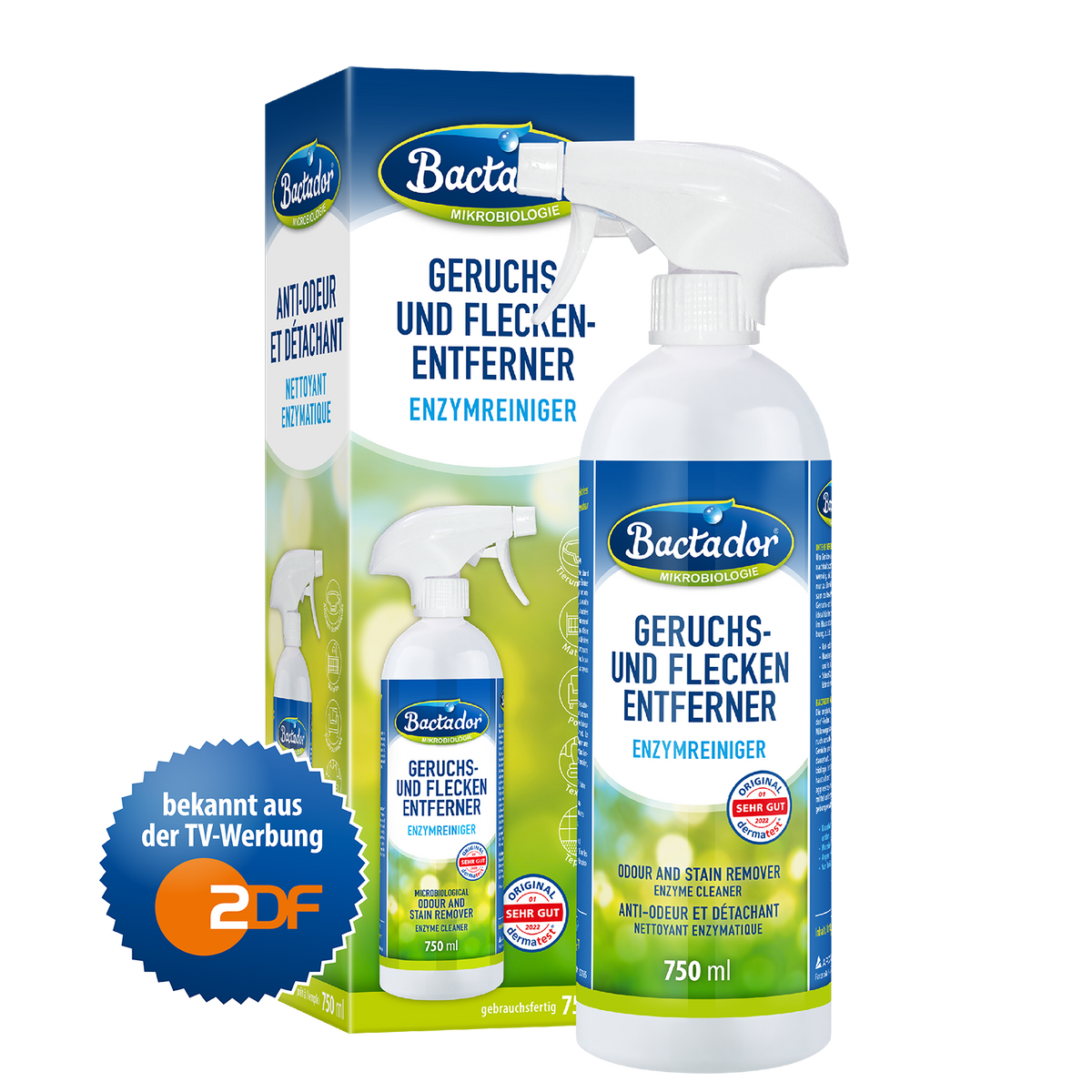
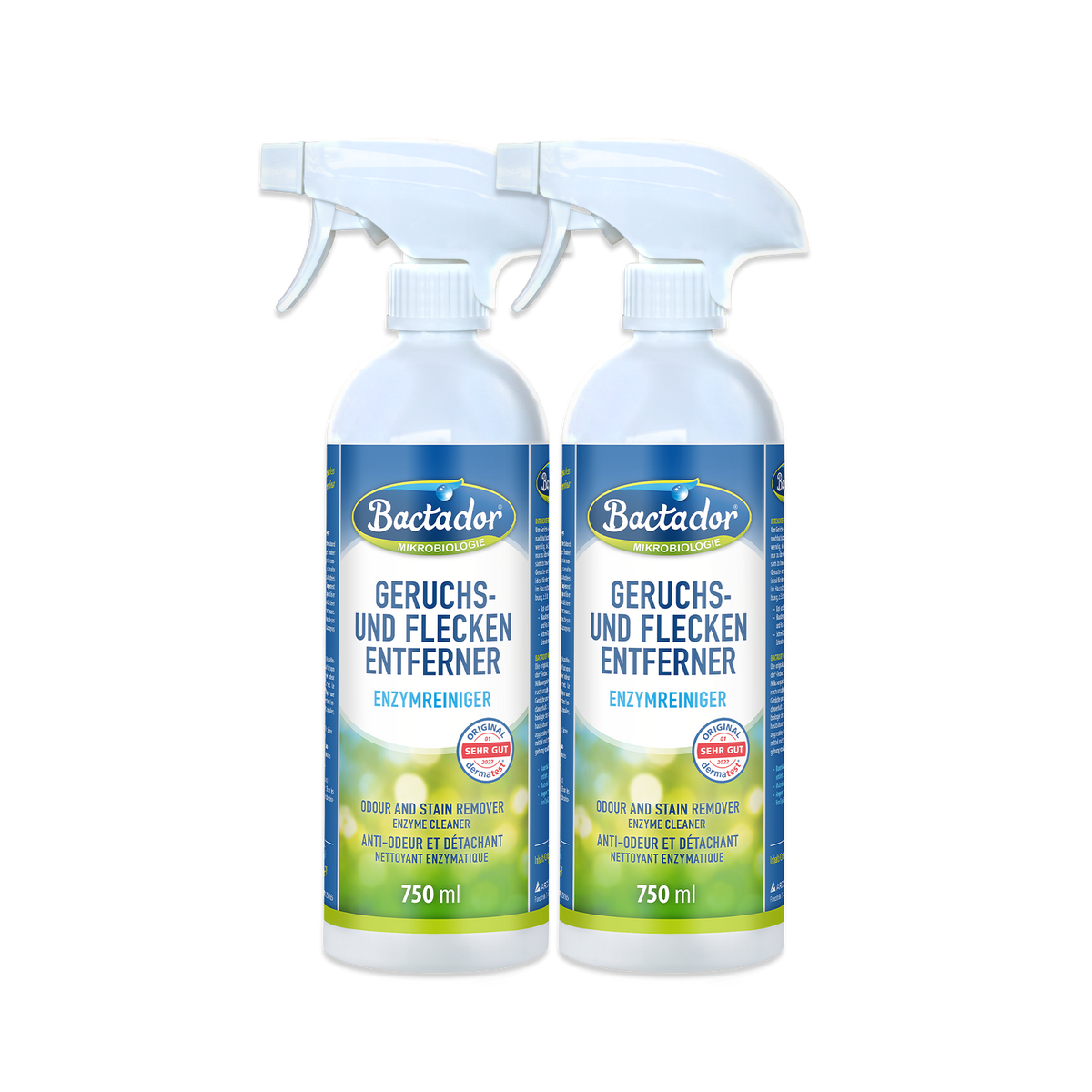
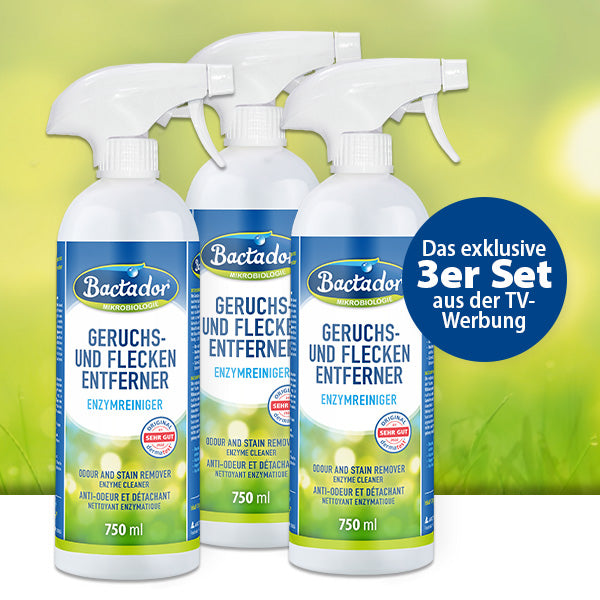
In addition to fabric softener, Bactador offers other products for different everyday applications. If you, for example, want to remove a musty or moldy odor from clothing without washing it, such as with delicate blazers or jackets, the Bactador Odor and Stain Remover Spray is your ideal helper.
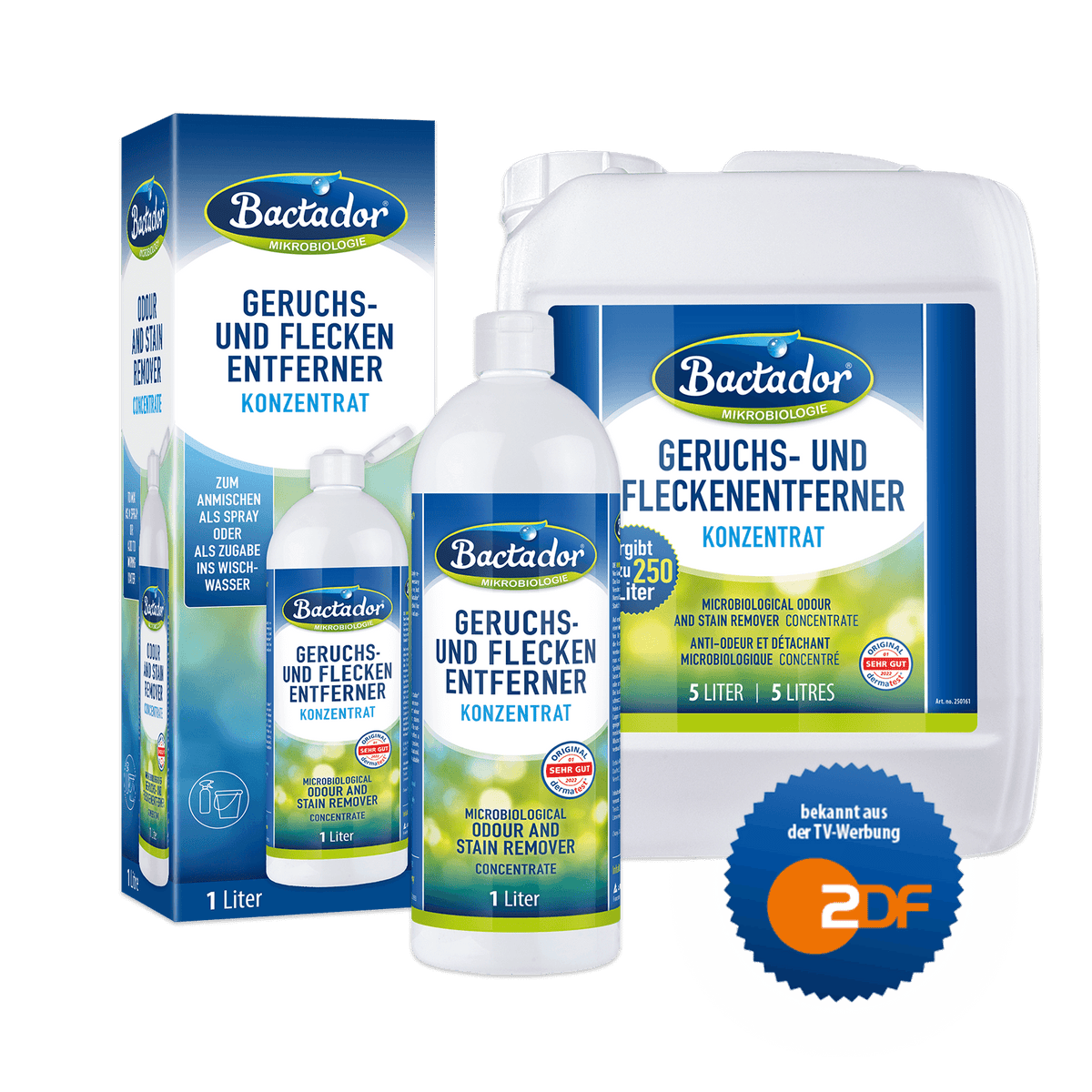
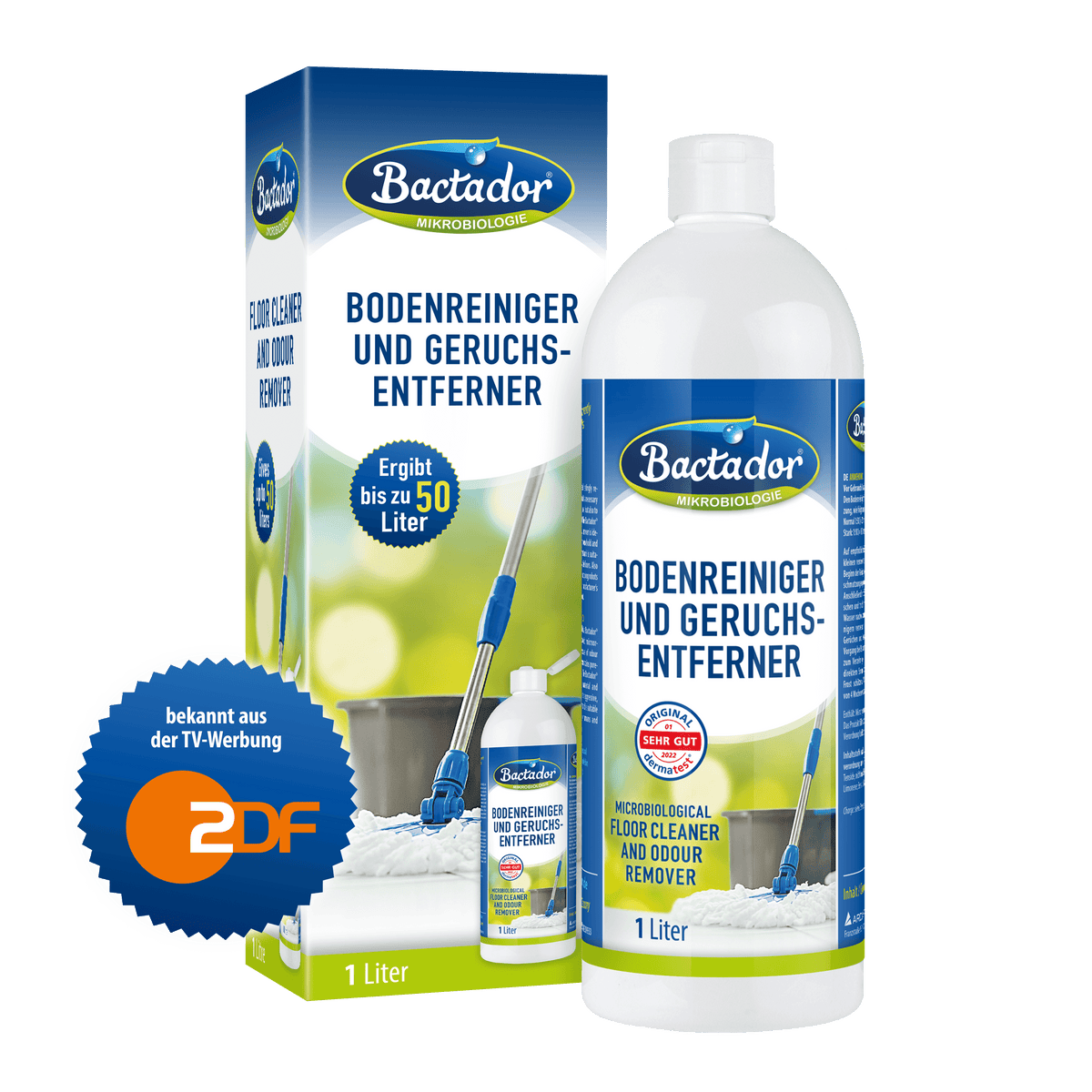
The Bactador Odor and Stain Remover Concentrate, on the other hand, can be used particularly versatilely: Mixed as a spray, you can use it to spray all water-soluble surfaces as well as carpets and free them from unpleasant odors. Alternatively, you can also use it as an additive to floor cleaning water; depending on the manufacturer's instructions, it can even be used in robotic vacuum cleaners and mops.


Common mistakes when washing and removing odors
Even with the right product, small mistakes can easily creep into your daily routine and prevent permanent odor removal. You should keep the following points in mind when using Bactador on your laundry:
- Do not underdose the Bactador Fabric Softener depending on the degree of odor or soiling, as this can lead to the odor source not being sufficiently removed. For stronger odors, 100 ml per wash cycle is recommended.
- Avoid additional fabric softeners, hygiene softeners or heavily perfumed laundry additives, as these can impair the microbiological effect of Bactador. Only undiluted Bactador Fabric Softener should be in the fabric softener compartment.
- After washing with Bactador, do not put your laundry in the dryer and simply let it air dry on the line. The heat of the dryer can impair the microorganisms, which continue to work in the damp fabric and effectively remove odors.
- For non-washable textiles: Spray the affected fabric generously with the Bactador Odor and Stain Remover Spray instead of just dampening it superficially, so that the enzyme cleaner can reach deep-seated odors and break them down.
General tips for your laundry:
- Adjust the amount of washing powder or liquid detergent to the degree of soiling of your laundry. Usually, too much detergent is used, which can later lead to musty deposits in the washing machine.
- Do not overload your washing machine with too much laundry, so that the detergent and the Bactador Fabric Softener can be distributed evenly over the entire wash load and work effectively.
- Leave the machine door and detergent compartment open after washing so that moisture can escape and no mold or bad odors develop in your machine.
- Air out your closets regularly too, because old wood in particular absorbs moisture and can transfer a musty odor to your clothing.
- Don't rely on odor sprays or fabric fresheners as a solution; they only temporarily mask the odor instead of eliminating it deep within the fibers.
- Clothing should be completely dry before you put it away in the closet, as residual moisture promotes the formation of new odors.
Conclusion
Whether it's sweat, a musty damp odor, smoke, or urine, the causes of odors in clothing and textiles are varied. However, the solution for odor removal remains the same. Only a microbiological treatment based on enzymes eliminates the organic source of the odor at its root instead of merely masking it. Home remedies and overpowering fabric fresheners are, if anything, only short-term emergency solutions. With the enzyme cleaner by Bactador and the Bactador fabric softener, your clothing will stay permanently fresh, hygienic, and pleasant, whether it's sportswear, children's clothing, or textiles in a household with pets.
Frequently Asked Questions
How can I remove stubborn sweat odors from clothing?
The most effective way to treat sweat odors in textiles is to add the Bactador fabric softener to the fabric softener compartment in addition to regular laundry detergent. The microorganisms contained within break down odor-causing residues microbiologically during the wash cycle, so that sweat odors are removed deep within the fibers permanently instead of merely being temporarily masked. It is important to simply let the laundry air-dry slowly on a clothesline or drying rack after washing so that the microbiology can achieve its full effect.
Can musty odors be removed from textiles without washing?
Musty odors can also be treated without a wash cycle, for example with the Bactador odor and stain remover spray or the concentrate mixed as a spray. Both penetrate deep into the fibers of the material and completely break down the source of the odor without the clothing having to go into the washing machine. This is particularly suitable for textiles that are worn frequently but cannot be washed. Or for a quick refresh in between.
Is it possible to permanently remove urine odor from clothing?
Yes, urine odor can be permanently removed from clothing with a deep-penetrating microbiological treatment with Bactador. The enzyme cleaner by Bactador breaks down the organic residues of urine until the source of the odor is completely and permanently eliminated down to the deepest fibers. This is the major difference compared to conventional fabric fresheners or home remedies, which merely temporarily mask the odor.
What is the difference between conventional and microbiological odor removers?
Conventional odor removers and fabric fresheners usually only temporarily mask unpleasant odors like a perfume with fragrances, without eliminating the actual cause. In contrast, microbiological odor removers by Bactador use microorganisms that produce natural enzymes, thereby breaking down the source of the odor deep within the fibers permanently.
Does freezing help against odors in clothing?
Freezing does not help against odors in clothing, because odor-causing bacteria are merely rendered inactive by it, but not broken down. As soon as the clothing thaws again or is warmed by body heat, the odor can return. Only a microbiological treatment with the enzyme cleaner by Bactador actually breaks down the organic residues and permanently removes the source of the odor.