
Our Bactador expert Lisa Peters knows all about the everyday challenges of shoes, Wellington boots, and walking shoes in the family. Here you'll learn where the smell comes from and how you can remove unpleasant odors from shoes permanently, not just for a day.
- Why shoes can smell unpleasant
- Immediate measures against smelly shoes
- Removing odors from shoes: Why home remedies are often not enough
- Deep-acting solution: Removing odors from shoes with Bactador
- Preventing shoe odors: How to keep your shoes fresh longer
- Conclusion
- Frequently asked questions
Fresh sweat hardly smells; the odor only develops when skin bacteria break it down.
The warm, damp climate inside the shoe promotes bacterial growth.
Sweat residue penetrates deep into the sole and lining and becomes a permanent source of odor there.
Microbiological solution: Bactador acts directly on these organic sweat and dirt residues and neutralizes them deep within the fibers, instead of just masking the odor.
Why shoes can smell unpleasant
Your shoes stink even though your feet are freshly washed? There is a simple reason for this. Feet have particularly many sweat glands, and a warm, damp climate quickly develops inside a closed shoe.
The odor actually does not come from the sweat itself, because fresh sweat hardly smells. Only when the bacteria that naturally live on your skin break down the sweat in the warm, damp shoe do odor-intensive substances with the typical cheesy smell develop. So if your shoes then stink of sweat, this is exactly the process behind it.
The tricky thing: The sweat residue penetrates deep into the insole, lining, and padding and settles there. That is why shoes still smell even when the feet have long been clean. If the shoes are not cleaned regularly and the insoles are never replaced, more and more residue accumulates and the cheesy odor becomes a permanent stench. You can only neutralize and remove it by addressing these organic residues directly.

Removes odors deep within the fibers and permanently
Against stubborn odors (e.g. urine, feces, vomit)
Enzyme cleaner without aggressive ingredients
Quick overview: Removing odors from shoes permanently
- Dry & Ventilate: Remove the insoles after every wear and let them dry separately in the air.
- No mere masking: Home remedies like baking soda or the freezer usually only reduce odors for a short time.
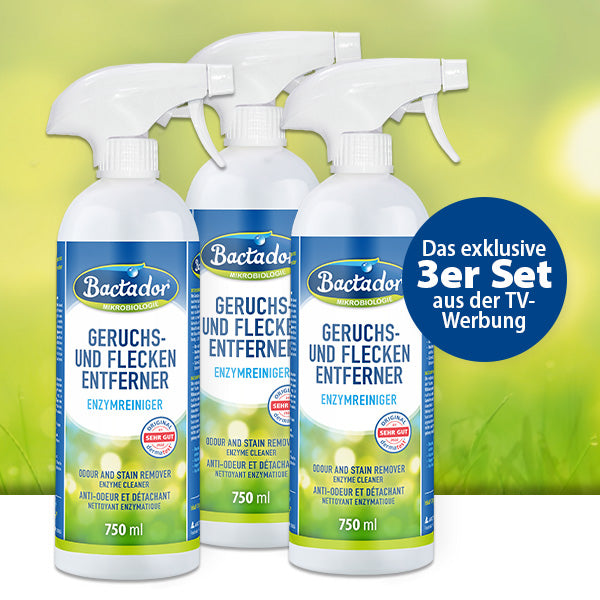
- Spray deep-acting: Spray the interior and soles with the microbiological Bactador odor and stain remover spray to break down organic sweat residues.
- Washable shoes: Clean fabric sneakers in the gentle cycle with Bactador fabric softener.

Immediate measures against smelly shoes
Your shoes stink – what can you do? The first step is very simple: Remove the insoles and let the shoes stand open in a well-ventilated place, instead of putting them directly in the shoe cabinet or gym bag. The insoles and the area underneath them in the shoe dry out much faster separately. A well-ventilated place without direct heating heat is important.
Proper ventilation and drying of shoes
So that moisture really escapes, loosen the shoelaces and fold the tongue of your shoes wide open. This allows air to reach all the way to the toe of the shoe. It is best to dry shoes at room temperature or in the shade. Direct heat from a heater, hair dryer, or bright sun makes leather brittle and can damage the glue points and sole of your shoes.
Shoe trees made of cedar wood or crumpled newspaper additionally help because they draw moisture out of the shoe. However, they are pure drying aids and not odor removers. Soaked shoes need several hours, often even the whole night, until they are really dry, just like freshly washed shoes.
Removing odors from shoes: Why home remedies are often not enough
Baking soda, newspaper, or a night in the freezer: Almost everyone knows these tips. They can bind moisture or briefly reduce odors, but do not reach the residues that are lodged deep in the sole and lining. At the latest after the next wear, the odor is usually back.
| Home remedies | What it does | Where the limit is |
|---|---|---|
| Baking soda or baking powder | Binds moisture and odor superficially | The odor source in the material remains, powder residues settle in seams and lining. |
| Newspaper | Absorbs moisture | Does not remove odors. |
| Freezer | Cold slows down the bacteria | They are not killed and become active again after thawing, the odor returns. |
| Citrus peels, scented sachets | Provide a fresh scent | Only mask the odor. |
Home remedies therefore only superficially treat the symptoms. For permanent freshness, the organic residues in the material must be broken down.

“Baking soda in the sneakers or overnight in the freezer: I have tried it all. The next morning it smelled minimally better, two days later the odor was fully back. Home remedies only disguise the problem.”
Deep-acting solution: Removing odors from shoes with Bactador
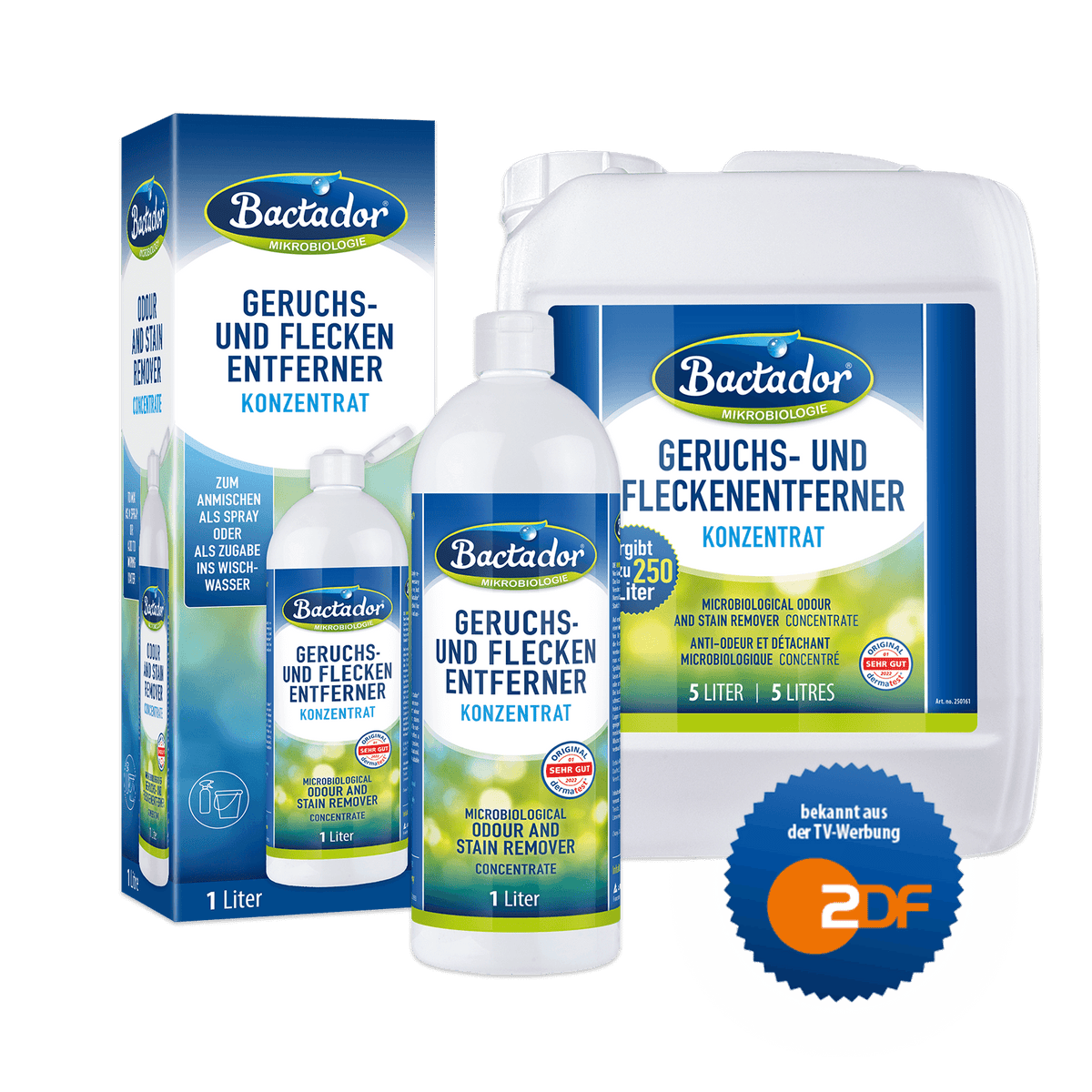
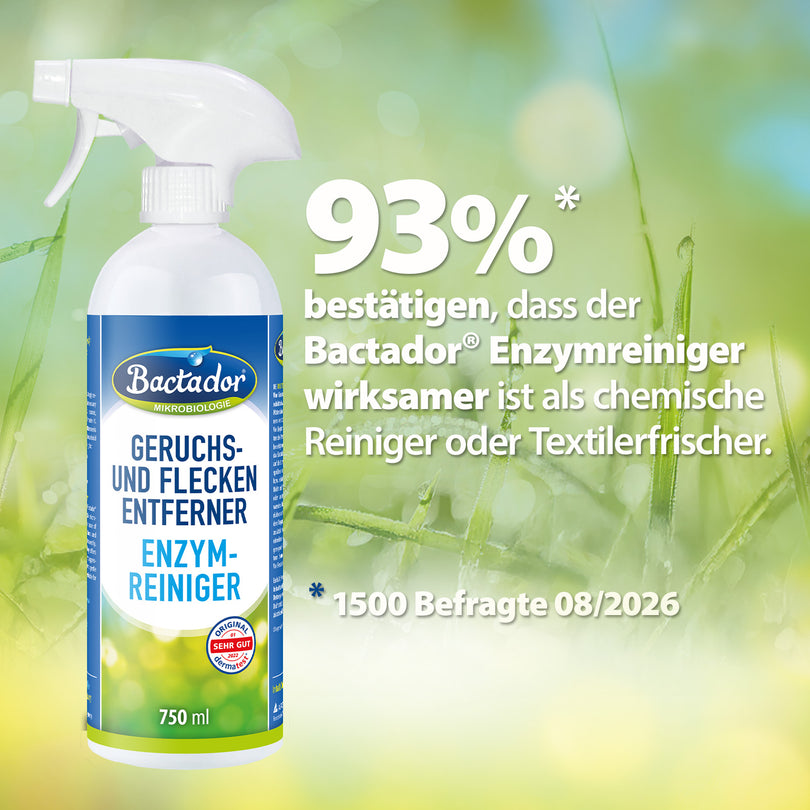
If you want to neutralize the odor in shoes, you have to address the cause: the organic residues in the material. This is exactly where the enzyme cleaners from Bactador come in. They break down the smallest odor particles from sweat, dirt, and dust residues, instead of masking them.
Bactador can be assigned to the family of enzyme cleaners, but goes one step further: A precisely defined selection of bacterial strains is activated and produces natural enzymes that break down sweat and odor particles deep within the fibers. Bactador does not contain artificial or synthetic enzymes. This power of microbiology ensures real, permanent odor removal and does not just temporarily mask odors.

Cleaning smelly shoes quickly
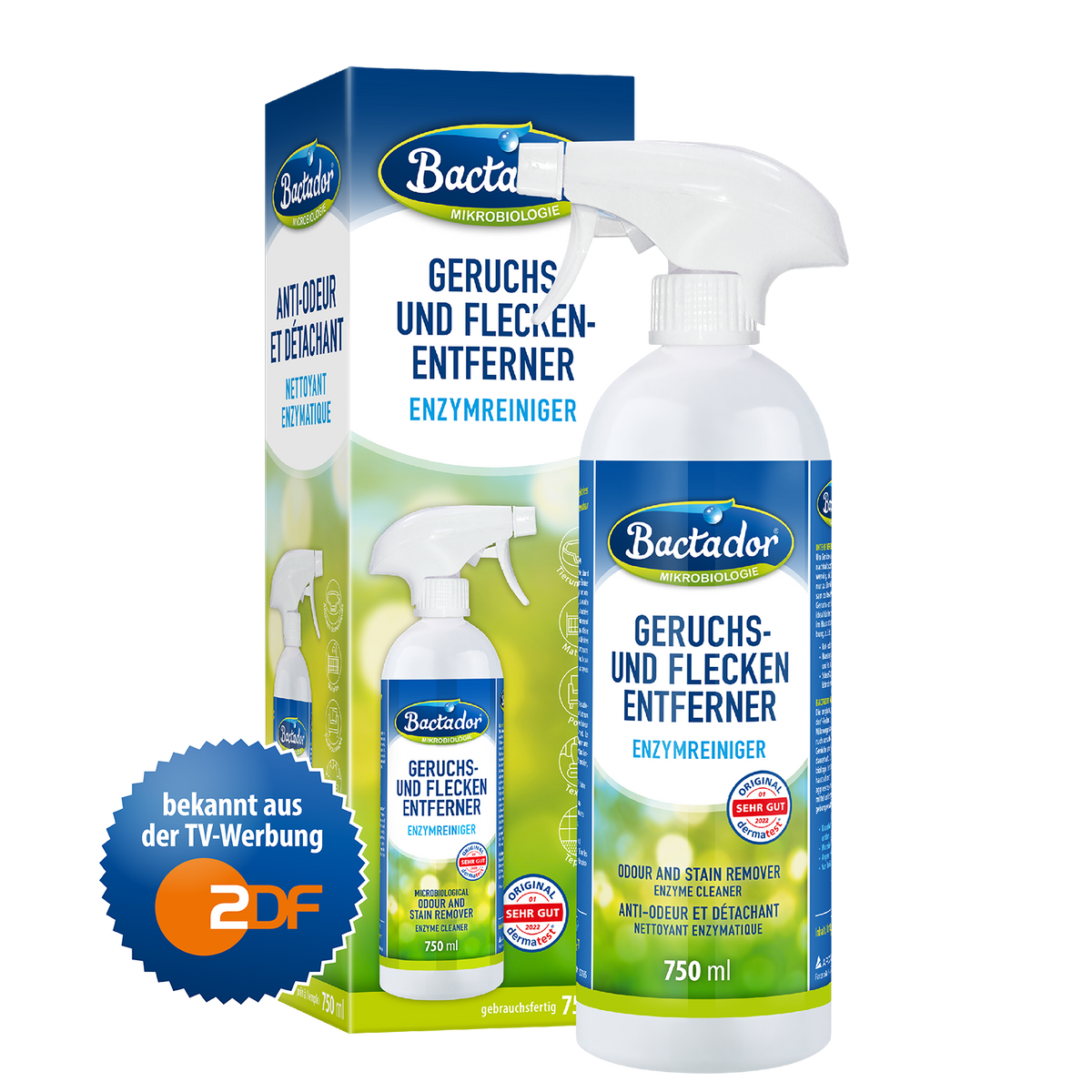
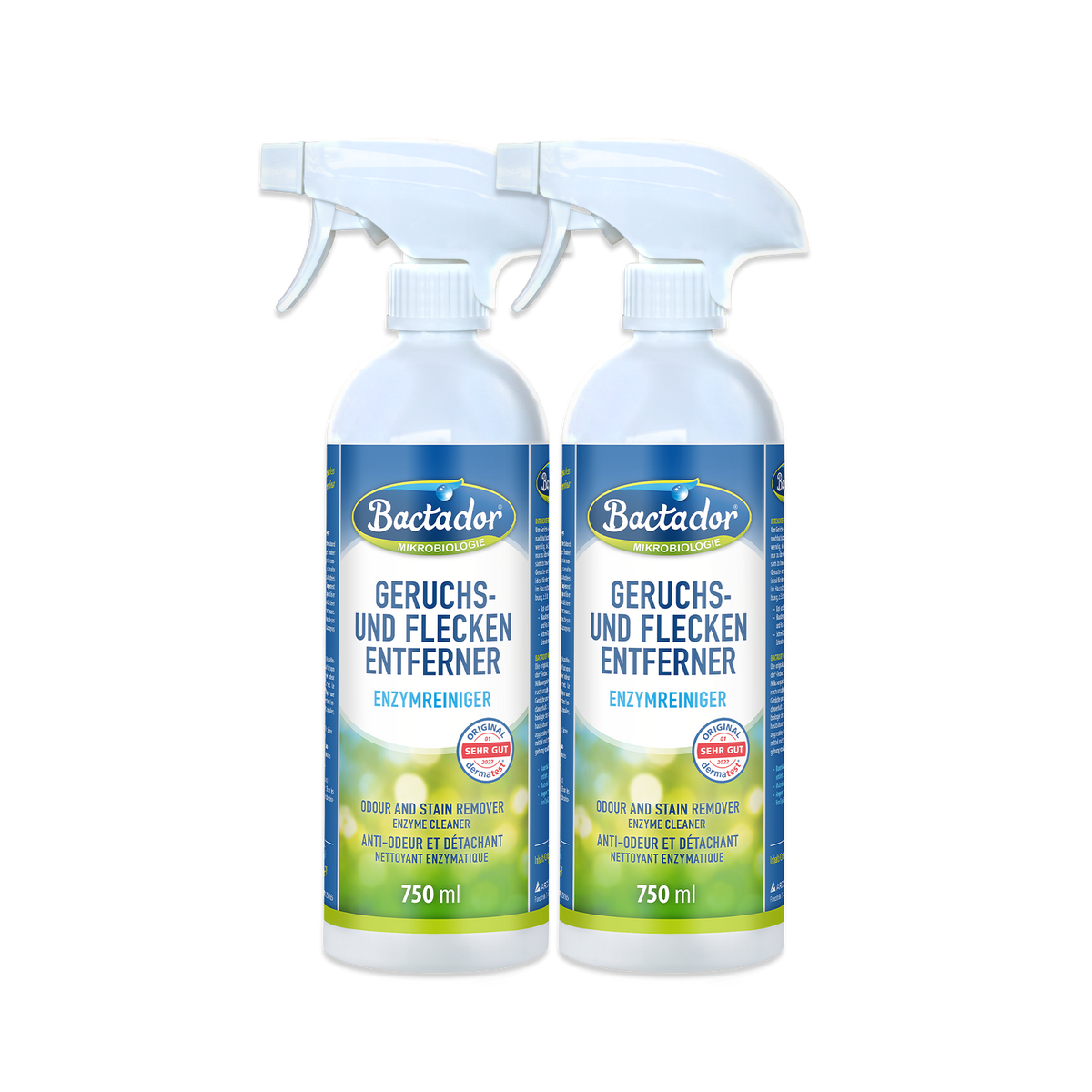
For all types of shoes, the Bactador odor and stain remover spray is the fastest solution. It is ideal for all sneakers, sports, work, and leather shoes. It is ready to use and does not need to be rinsed out. Here is how you do it:
- Remove the insole: Also remove coarse dirt from and around your shoe.
- Shake and spray: Shake the Bactador bottle vigorously. Then spray the interior of the shoe and the insole evenly and generously.
- Let dry in the air: Wiping or rinsing is not necessary. Put the insole back in only when it is completely dry.
- Repeat if necessary: For stubborn odors and depending on the material of the shoe, repeated application can be useful. It is helpful to let the material dry as slowly as possible, so that the Bactador microbiology can work in the damp material long enough.
Do not use any other cleaners after applying Bactador. For leather shoes, spray the interior and lining as described and let them dry in the air. For smooth leather on the outside, spray it on completely, let it work briefly, and wipe it dry while it is still damp. This also applies to sandals and barefoot shoes with cork or leather footbeds: always test the spray here first on an inconspicuous spot.
By the way, the spray is not only intended for shoes: Among the possible areas of application are all water-tolerant surfaces, such as floors, upholstery, mats, carpets, non-washable textiles, trash cans, or the area around the toilet.
“My most important tip: Always take out the insole and spray it and the inside of the shoes individually on all sides. That is exactly where most of the odor is. After that, I let both dry open in the hallway overnight, and in the morning the shoe is fresh again.”
General cleaning for washable shoes
You can easily wash fabric sneakers and many sneakers in the washing machine. Check the care label beforehand, remove the shoelaces as well as the insoles, and put the shoes in a laundry bag. Wash in the gentle cycle for hand or delicate wash at a maximum of 30 °C and without spinning.
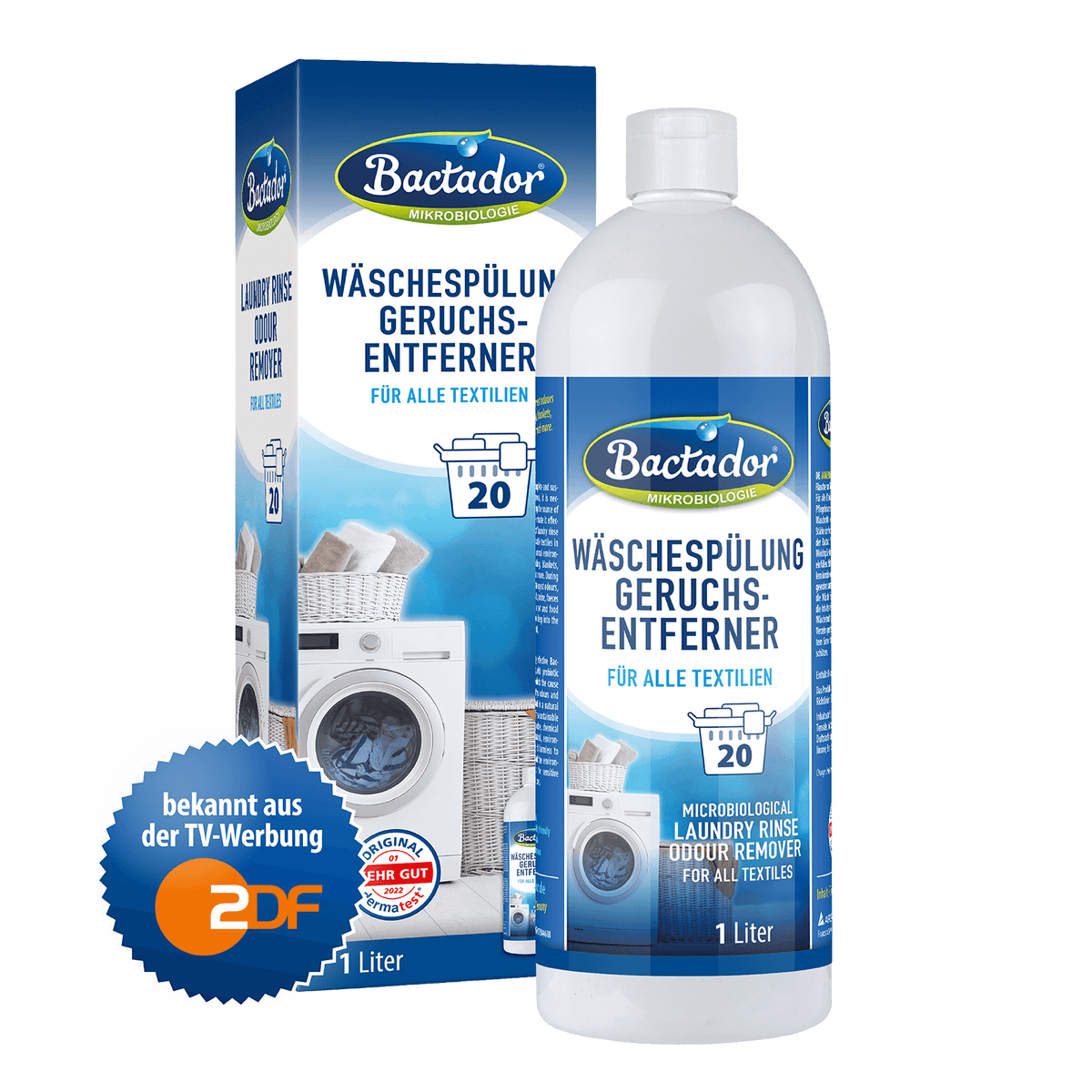
Add 50 to 100 ml of Bactador fabric softener to the fabric softener compartment. Do not use any additional fabric softener, as it can impair the effect. The fabric softener removes sweat residues deep within the fibers of the material, and that at every washing temperature. After that, the shoes dry in the air and not in the dryer. This protects the material, besides heat can reduce the effectiveness of the microorganisms. In the same way, you wash textile insoles, and you also get rid of the odor from sportswear.
It is best to also wash worn socks with the Bactador fabric softener. It breaks down the sweat and odor particles directly in the fibers, instead of just masking them. This way, you do not carry the odor back into the freshly treated shoe through the socks and break the cycle of smelly shoes and smelly socks.

Removes odors deep within the fibers and permanently
Against stubborn odors (e.g. urine, feces, vomit)
Hygienically fresh laundry – for all washing temperatures
Preventing shoe odors: How to keep your shoes fresh longer
With a few simple habits, significantly less moisture develops in the shoe. The following tips are general shoe care that you can incorporate into your everyday life completely independently of cleaning products.
Use breathable materials
Shoes made of breathable materials like leather or mesh allow moisture to escape better. What socks you wear makes a bigger difference than many think. Socks made of natural fibers like cotton, wool, or viscose from bamboo absorb sweat well and let the foot breathe. Pure synthetic socks tend to keep the sweat in the shoe in everyday life. An exception are functional socks for sports, because they specifically wick away moisture. Also change your socks and wash your feet daily.
Regularly changing and drying the shoes
Give your shoes a rest day: they need about 24 hours to dry out completely. If you rotate between two pairs, each will have enough time. Dry insoles separately and replace them if necessary. Also, ventilate your shoe cabinet regularly and only store shoes when they are dry.
Conclusion
Shoe odor is caused by sweat, dirt, moisture, and skin bacteria. Ventilation and thorough drying are therefore essential. Home remedies bind or mask odors temporarily, but do not remove them permanently. If you want to remove odor from shoes, it is best to target the organic residues in the material: with the Bactador odor and stain remover spray for all types of shoes and the Bactador fabric softener for washable shoes. This neutralizes the odor deep within the fibers permanently rather than just masking it temporarily.
Frequently Asked Questions
How often should I ventilate and dry my shoes?
You should ventilate and dry your shoes after every wear. Loosen the shoelaces, remove the insoles, and place the shoes in a well-ventilated area. Allow about 24 hours for them to dry before wearing the same pair again.
Is it possible to completely eliminate shoe odor?
Yes, it is possible to completely eliminate shoe odor if the organic and odor-causing residues in the material are broken down rather than just masked. The Bactador odor and stain remover spray neutralizes the source of the odor deep within the fibers and removes it permanently. Washable shoes can be washed with the Bactador fabric softener odor remover.
Why do shoes smell like cheese or sweat?
Shoes smell like cheese or sweat because bacteria that normally live on the skin break down sweat in the warm, damp shoe. This produces highly odorous substances with a typical cheesy smell. Fresh sweat itself hardly smells at all. The Bactador odor and stain remover spray breaks down these sweat residues deep within the fibers of the shoe.
Why do some shoes smell worse than others?
Some shoes smell worse than others because they are made of less breathable materials such as rubber or synthetic leather. People who wear shoes without socks or do not give them enough time to dry also notice the odor sooner. In all these cases, more moisture remains in the shoe, which promotes the formation of odor-causing molecules.
Can wearing the wrong socks cause shoes to smell?
Yes, wearing the wrong socks can cause shoes to smell. Purely synthetic socks tend to keep moisture in the shoe during everyday wear. Socks made of natural fibers such as cotton or wool absorb sweat better, while functional socks are the better choice for sports.
How can you remove odor from sneakers and work shoes that cannot be put in the washing machine?
You can remove odor from sneakers and work shoes that cannot be put in the washing machine using the Bactador odor and stain remover spray. Remove the insole, spray the interior and sole generously on all sides, and let everything air dry. There is no need to rinse.
Can Bactador spray also be used in leather shoes?
Yes, you can also use the Bactador odor and stain remover spray in leather shoes, but you should always test it on an inconspicuous area first. Spray the interior of the shoe thoroughly and let it air dry. Spray the smooth leather on the outside, leave it on briefly, and wipe it dry while it is still damp.
What helps with smelly barefoot shoes or sandals?
To deal with smelly barefoot shoes or sandals, it helps to treat the footbed specifically, as it absorbs sweat and dirt directly when worn without socks. Spray the footbed with the Bactador odor and stain remover spray and let it dry thoroughly. If the footbed is made of cork or leather, test the spray on an inconspicuous area first.
My cat urinated in my shoes: What can I do?
If your cat has urinated in your shoes, blot the urine with kitchen paper as quickly as possible, as it is much easier to remove fresh cat urine odor than old, absorbed urine. Then spray the inside and outside of the shoe with the Bactador Cat Urine Odor Remover and let it air dry. Perform a quick test on an inconspicuous area first with leather and other sensitive materials. Alternatively, wash washable shoes with the Bactador fabric softener. Cats often mark shoes because they bring in foreign odors from outside. If your cat urinates everywhere, there may be a deeper reason.
How can I remove odor from walking shoes?
To remove odor from walking shoes, first remove coarse dirt and dog feces from the tread after a walk. Then spray the sole and tread generously with the Bactador odor and stain remover spray and let them air dry. This keeps your hallway odor-free and prevents you from bringing dog odor into the home.