
In this post, we’ll show you how to remove cat urine odor and make the air fresh again, whether it’s fresh or dried cat urine from the sofa, floor, textiles, or even the mattress. Our Bactador expert Lisa Peters and Prof. Dr. med. vet. Norbert Mencke explain why cat urine smells so pungent and show you how to get rid of the odor for good.
- Why is it important to remove cat urine odor properly?
- Why does cat urine smell so bad?
- Pheromones in cat urine
- Step-by-step: Removing cat urine
- Removing cat urine odor from the sofa
- Eliminating cat urine odor from the air
- Special tips for hard floors
- Special tips for washable textiles
- Enzymatic cleaners for cat urine: Which cleaners really work
- 5 tips for preventing cat urine odor
- Conclusion
- Frequently asked questions
Deep-reaching action instead of masking: If you want to remove cat urine odor, you must eliminate the odor source deep within the fibers. Superficial cleaning with conventional cleaning products or home remedies is not enough.
Uric acid crystals are the main problem: Cat urine contains uric acid crystals that are reactivated by moisture. This explains why cat urine odor returns to the air even after months.
Home remedies are not enough: Vinegar, baking soda, and lemon juice only mask odors temporarily, can bleach fabrics, and cannot reach the organic, odor-producing residues that penetrate deep into surfaces.
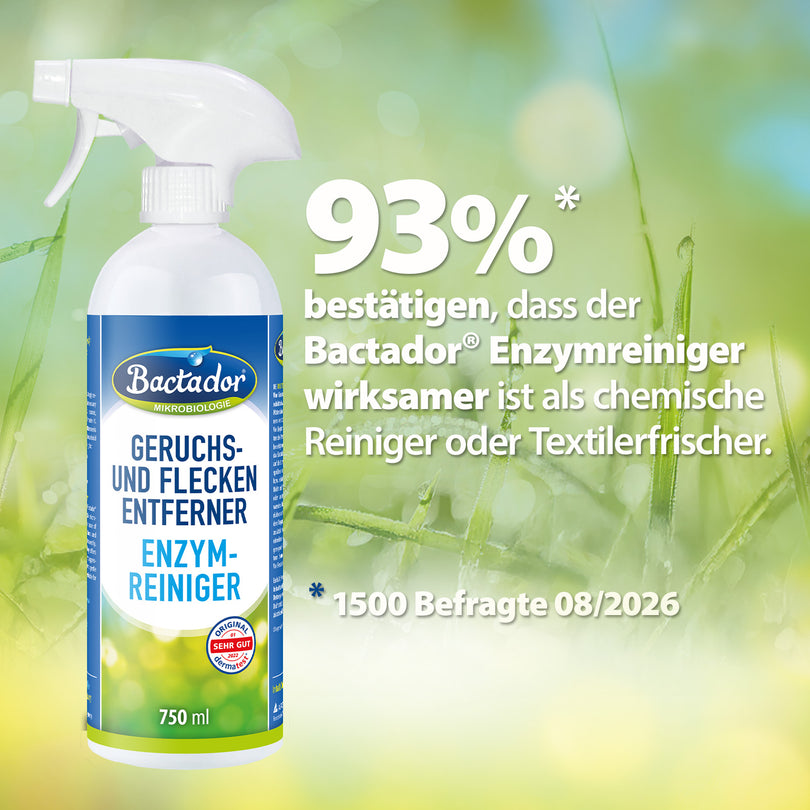
Microbiological enzymatic cleaners work deep within the fibers: Bactador microbiology actively breaks down odor molecules and ensures the permanent removal of cat urine stench.
Prevent marking behavior: With the help of Bactador, marking odors are also removed deep within the fibers, which can prevent repeat marking, because the cat is no longer reminded to mark the same spot again.
Why is it important to remove cat urine odor properly?
The odor of cat urine is not only unpleasant; cat urine itself can also have health consequences. This is because it contains bacteria and allergens that can be a burden in enclosed spaces over long periods. In addition, there is the cat's behavior: As long as even a faint trace of cat urine odor can still be detected in the air—and cats often smell much better than we humans do—they will continue to use the same spot for urinating.
Particularly insidious: Urine particles penetrate under floor tiles, into grout, and behind walls. This creates so-called urine depots, which cannot be removed with superficial cleaning. Cat urine must therefore always be removed deep within the fibers, otherwise the odor will return after a short time, often even more intensely than before.
Why does cat urine smell so bad?
Cat urine is among the most intense animal odors. The reason lies in the meat-heavy diet of cats: As carnivores (Carnivora), their metabolism produces particularly concentrated urine with a high proportion of uric acid, creatinine, urea, and ammonia. When the urine dries in the air, the proteins contained within break down and develop the characteristic pungent odor.

The urine of unneutered male cats smells particularly intense because it also contains sex pheromones. Urine marking also has a higher pheromone content, which intensifies the odor and marking behavior.

“Proteins and ammonia in cat urine can linger for a long time. Urine stains on a sofa or carpet can therefore still smell even after months. The only solution is a thorough cleaning with the right product: The Bactador cat urine odor remover removes the odor source deep within the fibers and permanently.”
Pheromones in cat urine
Cat urine contains pheromones, which are natural body scents. Your cat uses these to communicate with its own kind without facial expressions or gestures. Cats use the pheromones in their urine to mark their territory. It is important to remove this odor properly. Otherwise, it can encourage the cat to urinate at the same spot again and again.
Pheromones in urine also create a sense of relaxation and well-being and are important for finding a mate. They are therefore stress-relieving.
Unneutered male cats mark their territory with urine that also contains sex pheromones. These pheromones send a clear signal to them and other cats: “This is my territory.” As long as the male cat perceives them, he will continue to mark the same spot again and again. The only long-term effective solution is therefore the complete removal of the odor source, preferably with Bactador’s enzymatic cleaner.

Permanent odor removal with Bactador microbiology
Reliable against the most stubborn odors in the cat environment (urine, feces, vomit, etc.)
The alternative to chemical cleaners
Step-by-step: Removing cat urine
You have discovered a fresh urine stain and want to remove cat urine before the odor sets in? These steps work best:
- Absorb instead of spreading: Use kitchen paper or an absorbent cloth to soak up as much urine as possible. Do not rub, so that the cat pee is not pressed deeper into the fibers.
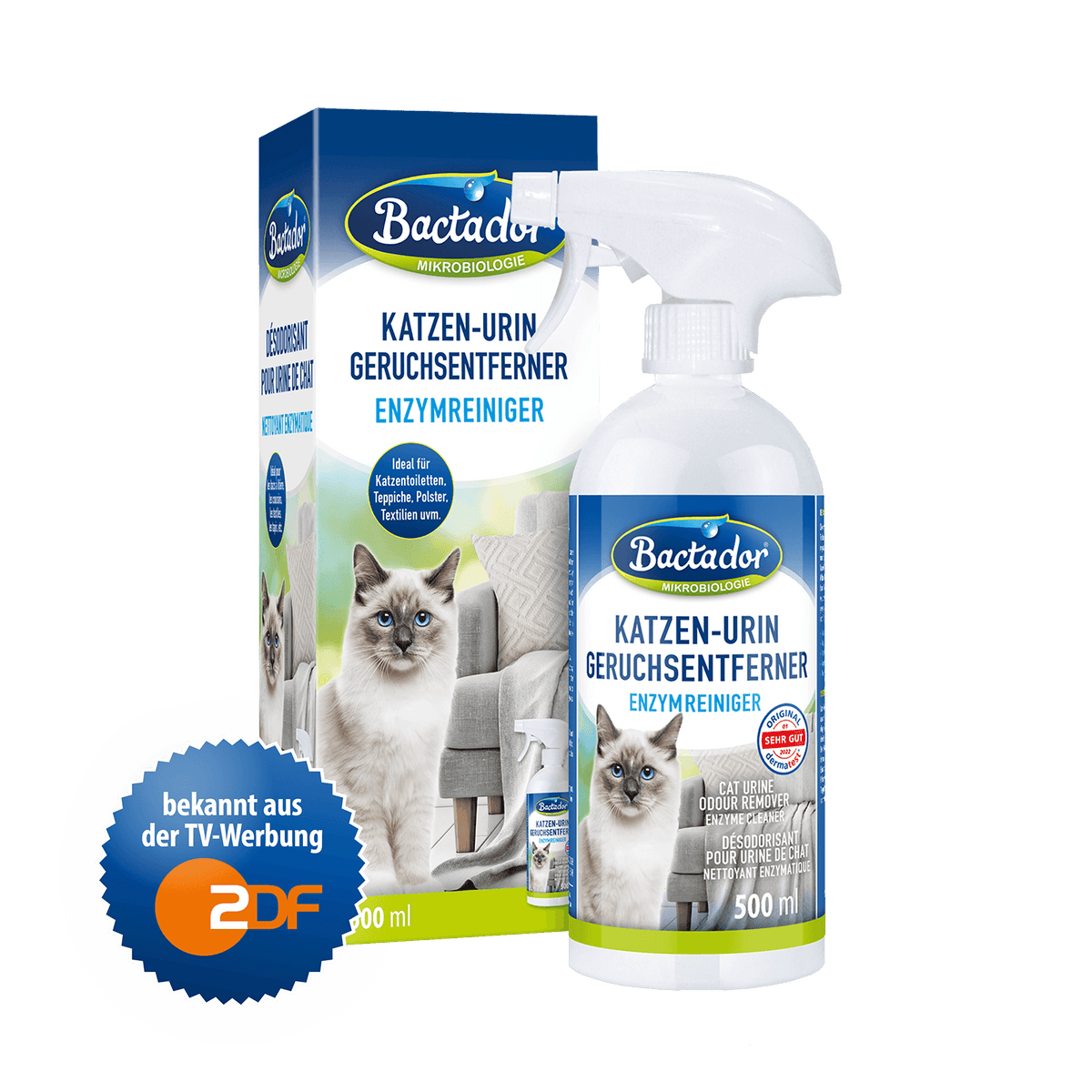
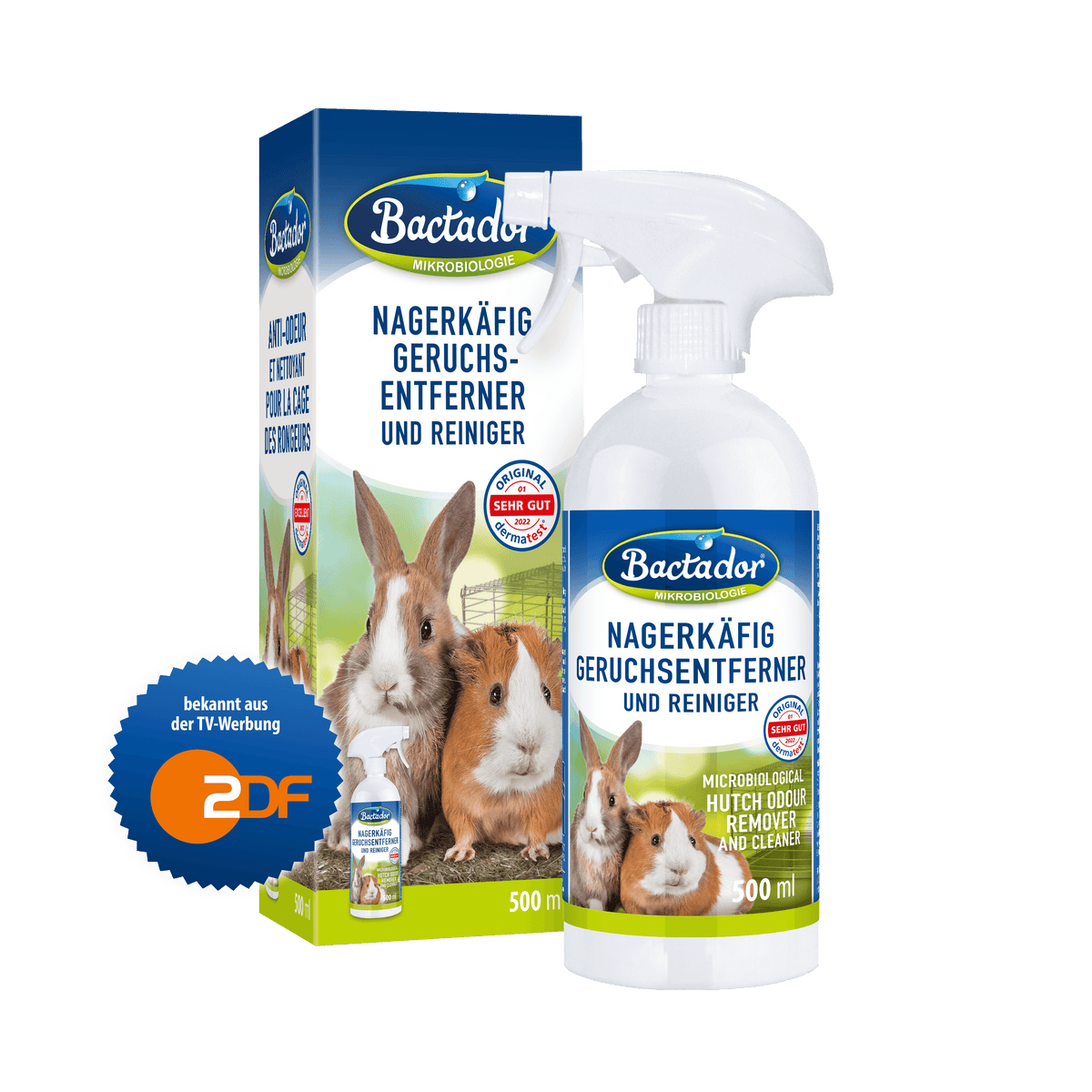
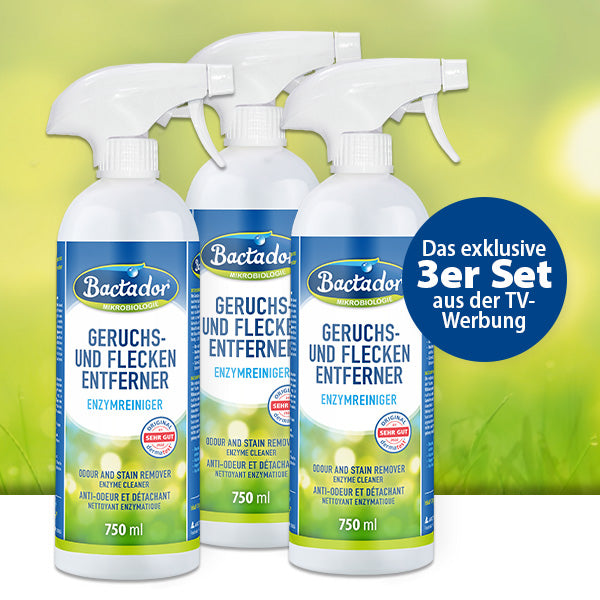
- Use a special cleaner: Use the Bactador cat urine odor remover, specially developed for cat urine odor. It is suitable for environments around people and animals and permanently removes cat urine and cat urine odor.
- Spray on and leave to work: Spray the affected area generously, also treating the edges, as odors often spread further than they are visible.
- Let dry, do not wipe: The microorganisms in Bactador need time to completely remove the odor source. If necessary and for stubborn stains, spray on again and simply let dry.
Removing dried cat urine: How to do it
Did you only notice late that your cat had urinated somewhere? Don’t worry, dried cat urine can also be removed; it just takes a little more time and the right method.
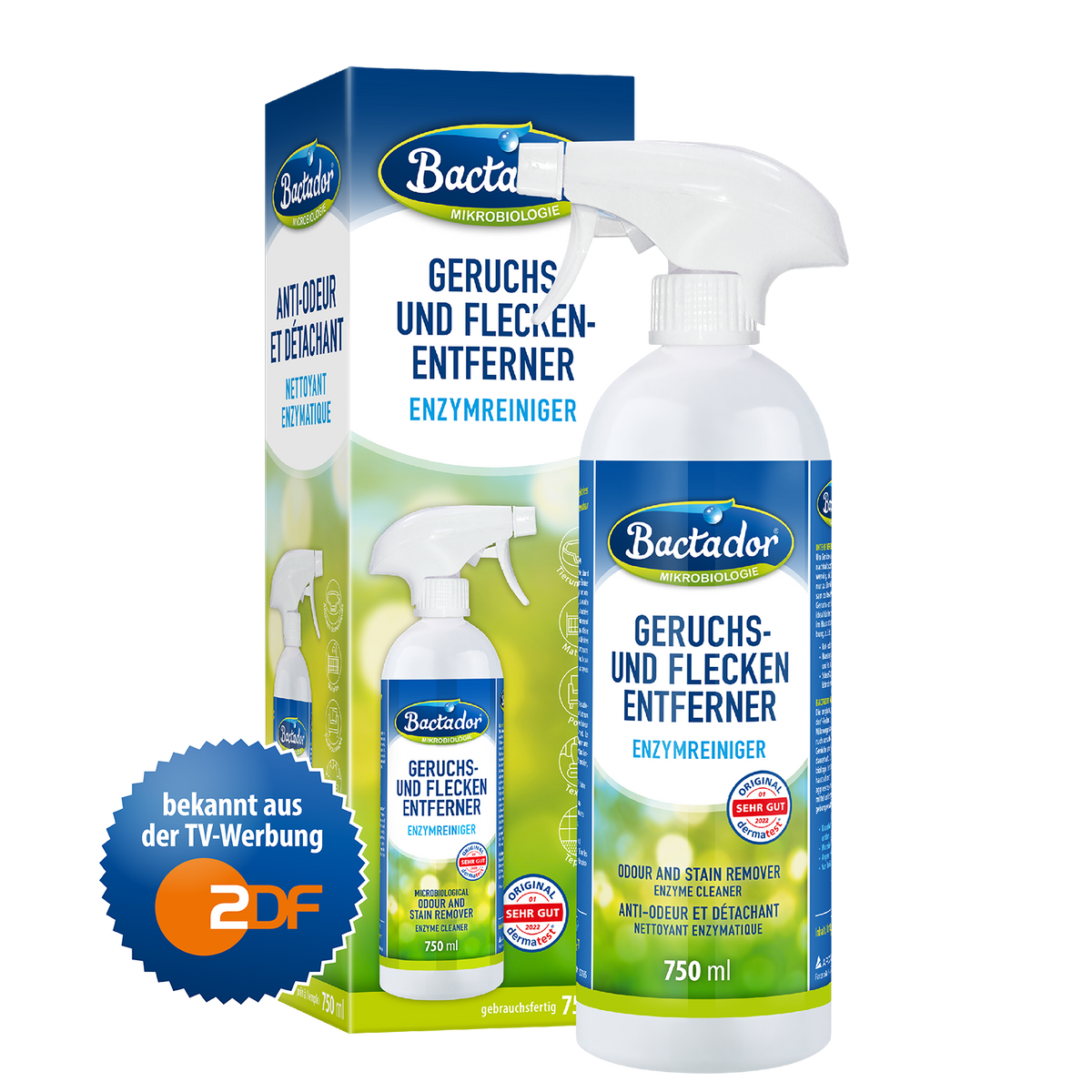
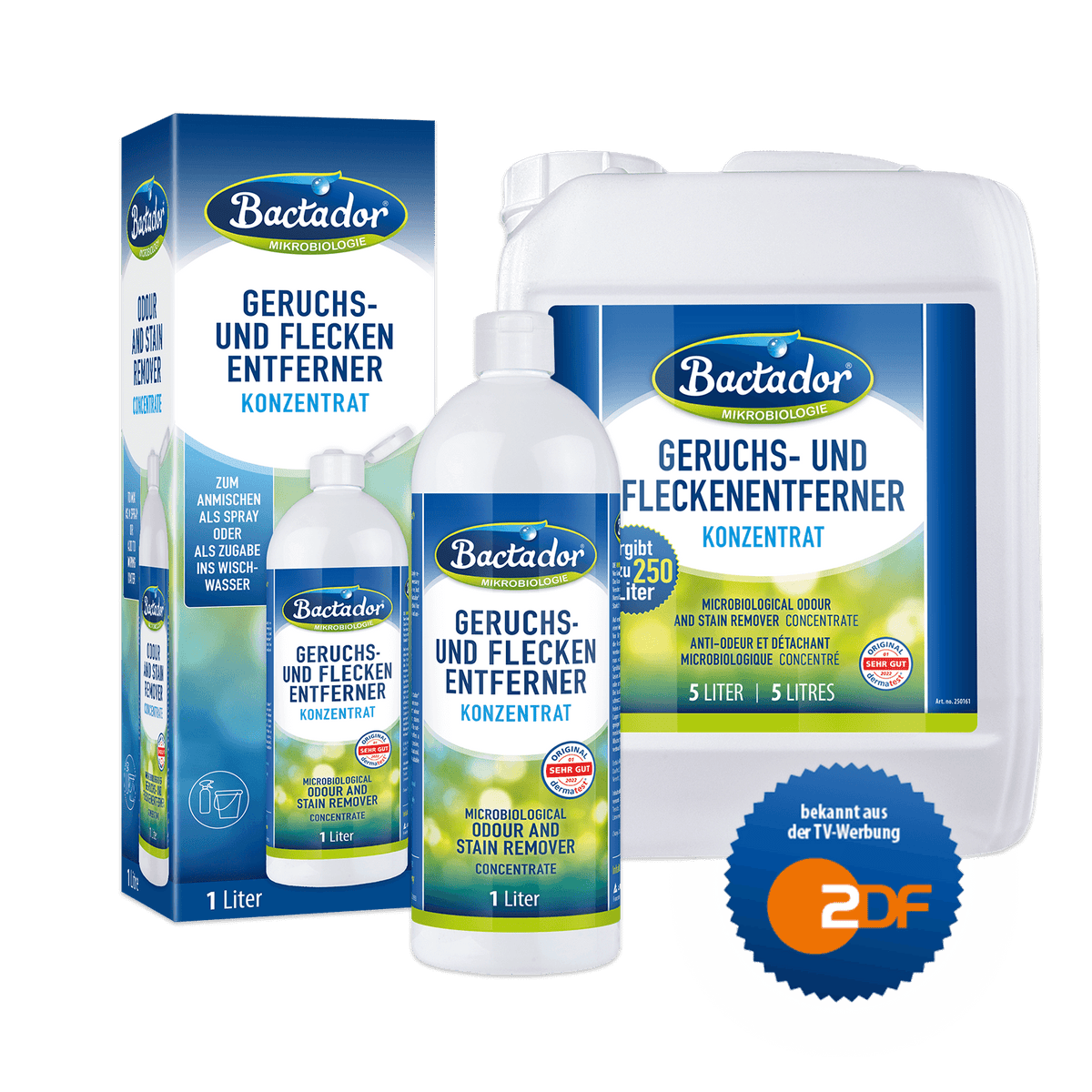
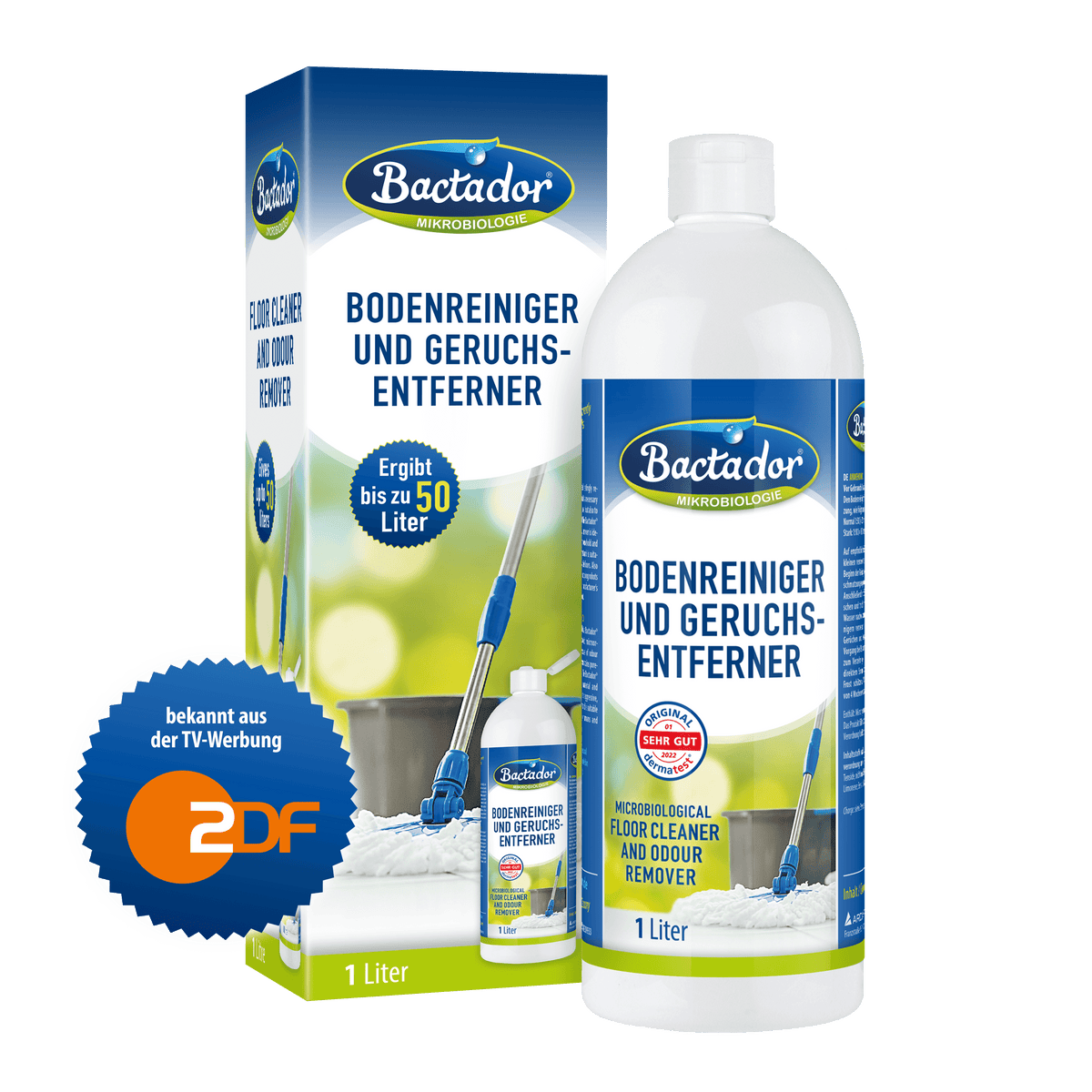
Spray the area generously with the Bactador cat urine odor remover so that the microbiology can penetrate deep into the fibers. Alternatively, you can use the Bactador odor and stain remover concentrate on larger areas, diluting it with water in a 1:10 ratio and applying it to the area. Then simply let it dry slowly; the microbiology needs moisture to work. If the odor is still slightly noticeable after 24 hours, repeat the process. For very old urine depots, such as in grout or under baseboards, several applications may be necessary until the odor is completely gone.
Removing cat urine odor from the sofa
The sofa is one of the most typical places for urine accidents and is also difficult to clean. Upholstered furniture consists of several layers of fabric, foam, and sometimes wood, into which the urine penetrates deeply. Therefore, if you want to remove cat urine from the sofa, you must penetrate all layers.
Here is how to remove cat urine from the sofa:
- First, soak up as much fresh liquid as possible with kitchen paper.
- Spray the Bactador cat urine odor remover generously until the area in the cushion (including the edges) is noticeably damp.
- Simply let dry and work without wiping.
- Removable covers and blankets can be washed with the Bactador laundry rinse aid.
- Repeat the process for stubborn odors.
- Important: If you want to remove cat urine odor from the sofa, do not be too stingy with the enzymatic cleaner from Bactador and spray the area generously. Only if the microbiology reaches all affected layers and works deep within can the odor be permanently removed.

Eliminating cat urine odor from the air
Sometimes the stain is no longer visible, but the cat urine odor remains in the air. This has two possible causes: Either an odor source has not yet been completely removed. This often happens at a spot you have not yet discovered, or you have used the wrong product and only temporarily masked the stain or odor. Then the urine particles can penetrate deep into grout or cushions and are reactivated by heat or humidity.
What helps against cat urine odor in the air:
- Systematically search for hidden odor sources, including under furniture, behind cabinets, and in crevices
- Treat large areas of suspected areas with Bactador, even if no visible stains are apparent
- Regularly ventilate thoroughly (cross-ventilation works best)
- Regularly wipe all floor surfaces with the Bactador odor and stain remover concentrate
- Avoid purely perfumed room sprays or odor neutralizers: they only mask the odor temporarily
- Regular vet visits: A regular check-up (about once a year) with your veterinarian helps to detect potential health problems such as diabetes or other chronic illnesses that involve increased urgency to urinate in a timely manner.
- Balanced diet: The composition of the food affects the odor of the urine. High-quality food with an appropriate protein content leads to less intense odors.
- Enough water: Set up several water stations and offer fresh water. Diluted urine smells less pungent.
- Enough litter boxes: Rule of thumb: one litter box per cat plus one additional one. This helps you avoid frustration-based territorial marking.
- Clean litter box: Cats love cleanliness. Daily scooping and weekly litter changes are essential. With the Bactador cat urine odor remover, the litter box not only looks clean but also remains permanently odor-free.
Important: Air fresheners and scented candles do not remove cat urine odor; they actually intensify it over time because the fragrance molecules can combine with the organic odor particles.
Special tips for hard floors
Cat urine can generally be removed well from laminate, tiles, and wooden floors, provided the urine has not already penetrated into grout or cracks in the wood. Spray the affected area with the Bactador cat urine odor remover and leave the product to work. Alternatively, you can use the Bactador odor and stain remover concentrate for wiping: simply mix it with water in the specified ratio and use it to clean the entire area.
Special care is required for tiles with silicone grout or for wooden floors: Stinking urine depots can become particularly stubborn here. A second or third application may sometimes be useful and is easily possible with the material- and skin-friendly Bactador.
Special tips for washable textiles
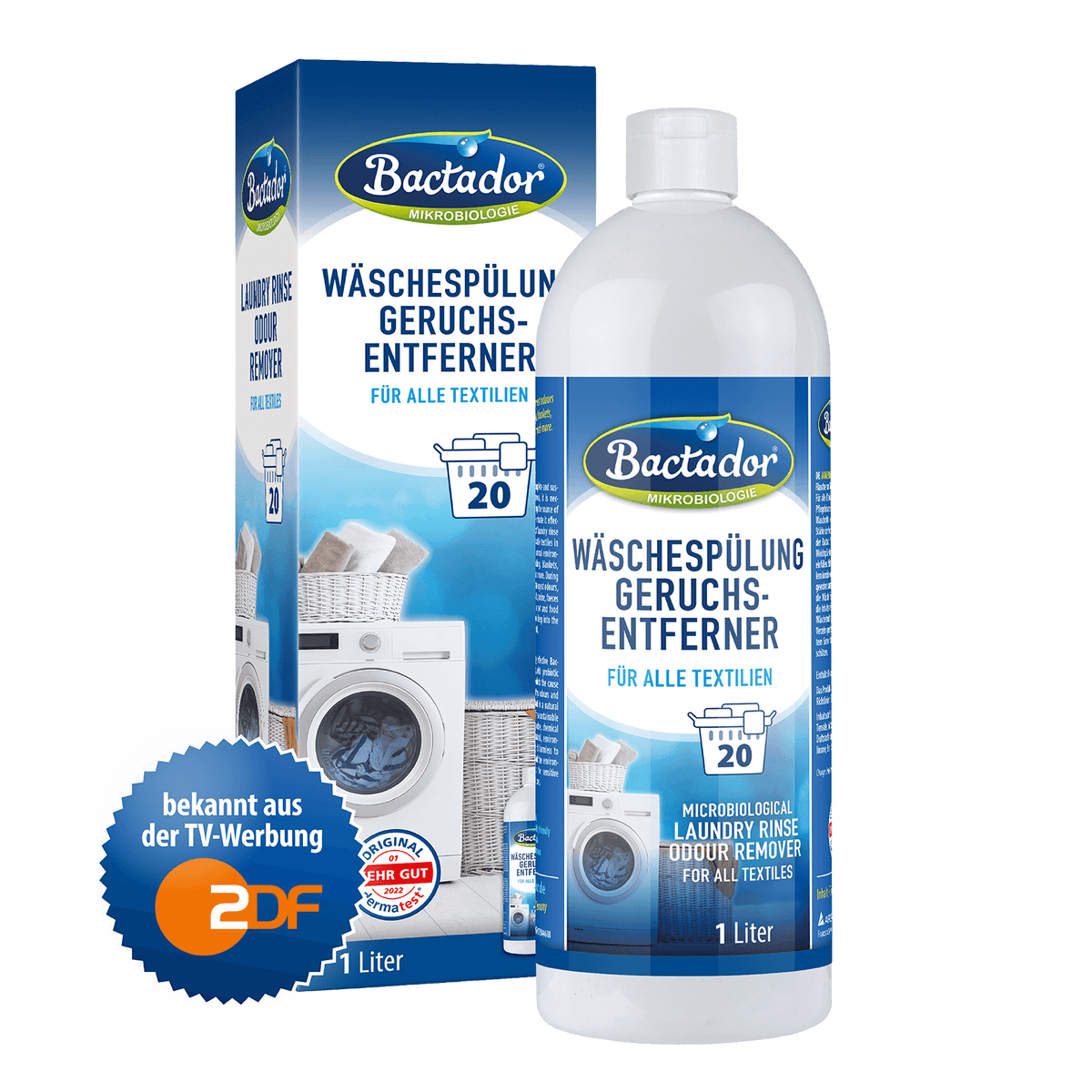
Covers, blankets, pillows, or scratching post covers that smell of cat urine can be thoroughly cleaned with the Bactador laundry rinse aid. It is added to the normal laundry detergent in the fabric softener compartment and is suitable for all washing temperatures. Important: Let the laundry air dry afterward and do not put it in the dryer, as the heat from the dryer would impair the microbiological ingredients.

Removes odors deep within the fibers and permanently
Against stubborn odors (e.g., urine, feces, vomit)
Enzymatic cleaner without aggressive ingredients - recommended by veterinarians
Enzymatic cleaners for cat urine: Which cleaners really work
Enzymatic cleaners for cat urine are often offered in stores, and they are actually far more effective than home remedies or chemical cleaners. However, there are major differences between the products.
Conventional enzymatic cleaners contain artificial, synthetically produced enzymes. They work superficially, but due to the lack of microbiological components, they rarely reach the deeper layers where the odor source has settled.
The Bactador Microbiology works differently: It contains probiotic microorganisms that are activated after spraying and produce natural enzymes. These break down dirt and odor particles deep into surfaces of any kind until the odor source is neutralized deep within the fibers. This ensures that the removal of the cat urine odor is not just superficial, but truly permanent.
A strong urine odor, frequent urination, pain, blood in the urine, or suddenly avoiding the litter box can indicate an acute urinary tract infection. In these cases, you should see a veterinarian immediately: the sooner, the better for your cat's health.

5 Tips for Preventing Cat Urine Odor
Conclusion
Anyone who wants to remove cat urine odor must go deeper than the surface. Home remedies such as vinegar or baking soda only temporarily mask the odor and usually make it worse afterward; conventional cleaners do not reach the organic residues deep within the fiber layers. The result: The odor returns, and with it, the cat's uncleanliness and marking behavior.
The Bactador Microbiology offers a real solution. It actively breaks down odor molecules deep within the fibers, is gentle on skin and materials, and is suitable for environments inhabited by people and animals. Whether you want to remove cat urine from the sofa, need to remove dried cat urine, or are struggling with a persistent cat urine odor in the air: with the right product from Bactador, the odor is truly permanently eliminated.
Frequently Asked Questions
How can I permanently remove cat urine odor?
Permanent removal of cat urine odor is only possible if the odor source is eliminated deep within the fibers. The microbiological enzyme cleaners from Bactador actively break down the organic, smelly residues of cat urine. Home remedies and conventional cleaners, on the other hand, only temporarily mask the odor.
How do I remove cat urine from the sofa?
To remove cat urine from the sofa, first blot up the liquid with kitchen paper, then spray generously with the Bactador cat urine odor remover so that the microbiology reaches all layers of the upholstery. Then simply let it dry, repeating the process if necessary. Removable covers can additionally be washed with the Bactador fabric softener.
Can dried cat urine still be removed?
Yes, you can remove dried or old cat urine as well. Thoroughly moisten the affected area with the Bactador cat urine odor remover spray so that the microbiology can also reach the old odor residues. For very old urine deposits, several applications are often necessary until the odor is completely gone.
What should I do about cat urine odor in the air?
If the cat urine odor lingers in the air, there is usually still an active odor source, often in a place you have not yet discovered. You should then systematically check all possible locations, treat suspicious areas thoroughly with Bactador, and ventilate regularly. Air fresheners and scented candles do not permanently help against cat urine odor.
Do enzyme cleaners work against cat urine?
Enzyme cleaners are generally more effective against the stench of cat urine than home remedies or simple cleaning products because they actively break down organic residues. However, conventional enzyme cleaners usually contain only synthetic, i.e., artificial enzymes with a limited range of effectiveness. Bactador Microbiology goes further: It contains microorganisms that produce natural enzymes that break down the odor-forming molecules of the urine until the odor source is completely eliminated.
How often should I use Bactador to remove cat urine odor?
For fresh cat urine stains, a single application with the Bactador cat urine odor remover is usually sufficient. For dried or old cat urine, two to three applications may be necessary, each after the previous treatment has completely dried. Important: Do not use chemical cleaners between or after applications, as they would impair the microorganisms.